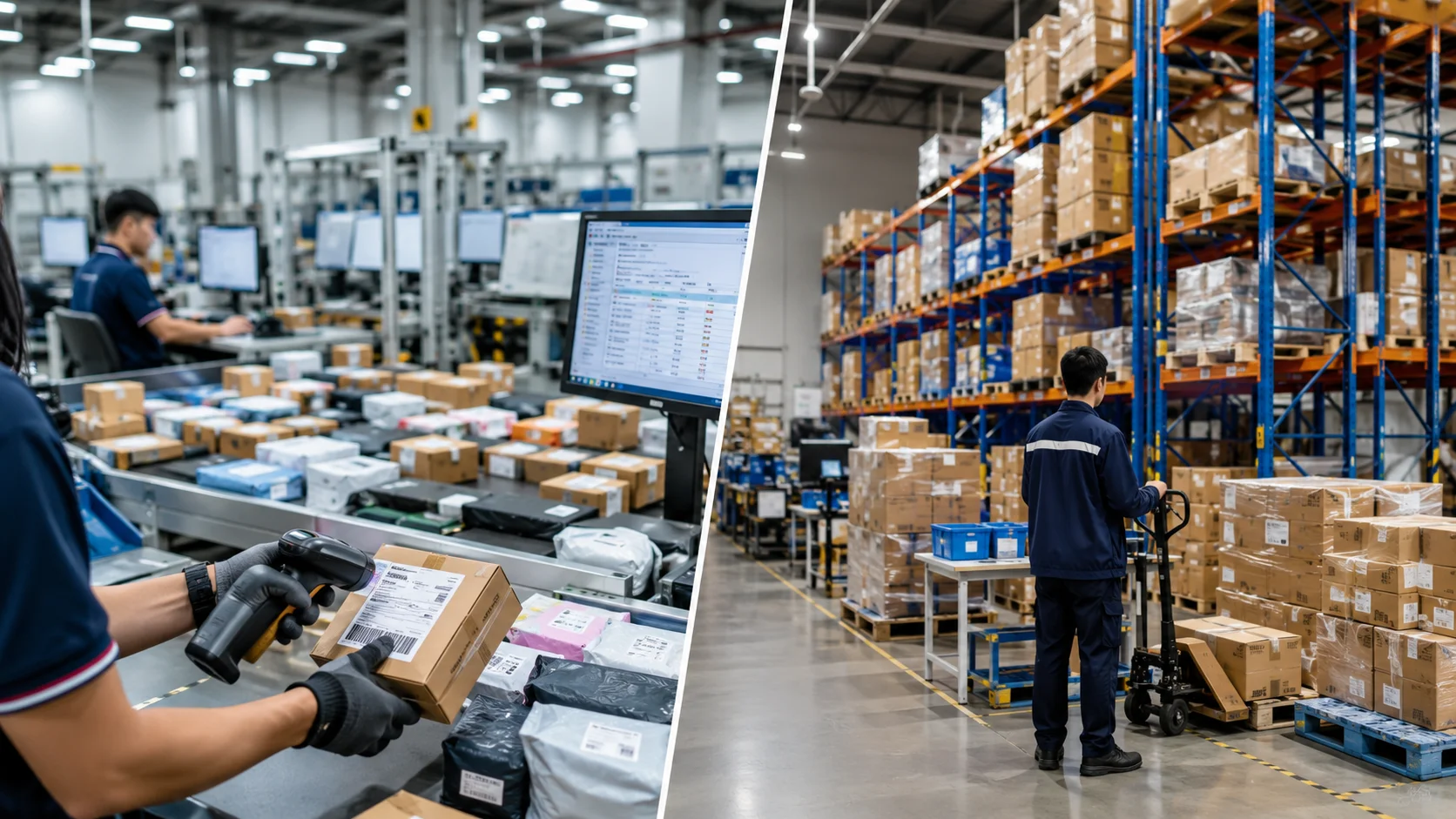
China's cross-border e-commerce customs system uses distinct supervision codes. Learn how the 9610 direct-mail and 1210 bonded-warehouse models work and which suits your sales channel. This article is intended for international buyers and China-based suppliers preparing a real transaction involving the 9610 and 1210 cross-border e-commerce customs models.
Customs work is driven by the actual goods and evidence, not by a product nickname or a freight quotation. Classification, value, origin, licenses and declaration data must form one consistent record. This is not a product-name-only question. The evidence behind the goods and the legal roles of the parties matter. For connected topics, see China Customs Clearance: Step-by-Step Process for Importers and Exporters, China's Prohibited and Restricted Export Goods List: What You Cannot Ship, Temporary Import and Export in China: ATA Carnet and Bonded Processing Explained.
What This Means in Practice
Code 9610 is commonly used for cross-border e-commerce retail import and export transactions with order-level data and simplified or consolidated declaration arrangements. Code 1210 is associated with bonded cross-border e-commerce in customs special supervision areas or bonded logistics centres. They are distinct from B2B export codes 9710 and 9810.
The decision should be recorded, not kept as an informal email assumption. Repeat shipments are easier to manage when the approved reasoning becomes controlled master data.
A Practical Step-by-Step Workflow
When reviewing the 9610 and 1210 cross-border e-commerce customs models, use this order of operations before cargo or funds are committed:
- Step 1: Define whether the transaction is retail or B2B, import or export, direct shipment or bonded stock.
- Step 2: Confirm enterprise, platform, payment, logistics and warehouse qualifications.
- Step 3: Transmit order, payment and logistics data in the required format.
- Step 4: File the corresponding customs declaration or list under the selected model.
- Step 5: Manage returns, inventory reconciliation and tax treatment under the same model.
When reviewing the 9610 and 1210 cross-border e-commerce customs models, the process works best when the buyer, supplier, agent and logistics provider use the same controlled data.
Documents and Data to Prepare
Ask the supplier and buyer to provide the following before the final document draft:
- e-commerce order data
- consumer or business buyer information as required
- payment and logistics records
- bonded warehouse inventory data for 1210
- customs lists, declarations and return records
When reviewing the 9610 and 1210 cross-border e-commerce customs models, for repeat shipments, version-control the product and document templates so obsolete data is not reused.
Common Failure Points
Watch for these failure points:
- describing 1210 as a universal overseas warehouse export code
- confusing 9610 retail trade with B2B direct export
- missing the three-data matching requirement
- using a bonded model without compliant inventory controls
- ignoring product catalogue and consumer transaction restrictions
A clean file reduces avoidable risk but cannot remove the authority’s right to inspect or review.
Budget and Timeline Considerations
Cash-flow planning should identify when supplier payment, taxes, deposits, freight, guarantees or rebate settlement become due. A process can be compliant yet commercially difficult if funding dates are ignored.
Allow contingency for authority questions and third-party delay. The controllable service standard is document readiness and response speed, not a guaranteed government decision date.
How to Make the Decision
Select the code from the actual transaction flow, not from perceived tax advantages. For B2B direct export and overseas warehouse export, review 9710 and 9810 separately.
A useful stress test is to ask whether the structure remains defensible if the shipment is inspected or the full transaction chain is requested.
How Zhongshen Can Support the Process
The customs service can cover pre-shipment review through release and document archiving, with the exact scope defined by the product, port and import or export structure.
To assess the 9610 and 1210 cross-border e-commerce customs models, send the product specification, parties, value, quantity, route, Incoterm, payment plan and required service scope. See Zhongshen’s China customs clearance service for the relevant service framework.
Pre-Shipment Control Checklist
- Completed: Define whether the transaction is retail or B2B, import or export, direct shipment or bonded stock.
- Completed: Confirm enterprise, platform, payment, logistics and warehouse qualifications.
- Evidence available: e-commerce order data.
- Evidence available: consumer or business buyer information as required.
- Risk cleared or assigned: describing 1210 as a universal overseas warehouse export code.
- Risk cleared or assigned: confusing 9610 retail trade with B2B direct export.
Bottom Line
Cross-Border E-Commerce Customs Clearance in China: The 9610 and 1210 Models Explained should be handled as part of transaction design, not as a last-minute filing task. Early review creates options; late review usually creates storage cost, missed cut-offs or tax uncertainty.